Skip to content

Courtney Cantrell's COURT CAN WRITE

  • Court Where?
  • Court Who?
  • Court’s Shorts
  • Epic Fantasy
  • Paranormal Fantasy
  • Sci-Fi
June 27, 2017 / Courtney

illustrations of depression (major trigger warning)

I’m using this post as a repository for images that resonate with me concerning depression, anxiety, fatigue, and so forth.

Who knows? There might even be happy stuff here on occasion.

But don’t expect it.

This is the darkness. Here there be dragons. And they’re not the cuddly kind.

_____________________________

For a long time now, this image has resonated with me the strongest. To varying degrees, this is exactly how I’ve felt for years.

by Shawn Coss

_____________________________

Upon my counselor’s recommendation, I recently watched the movie INSIDE OUT for the first time. And then, a few days later, I watched it a second time. I’ll soon be watching it a third time, BECAUSE IT IS PERFECTION. It’s probably going to get its own full-length blogpost sometime soon. So stay tuned.

In the meantime, here’s Sadness…who has her place and her vital purpose, and whom I’m slowly learning to love as my friend.
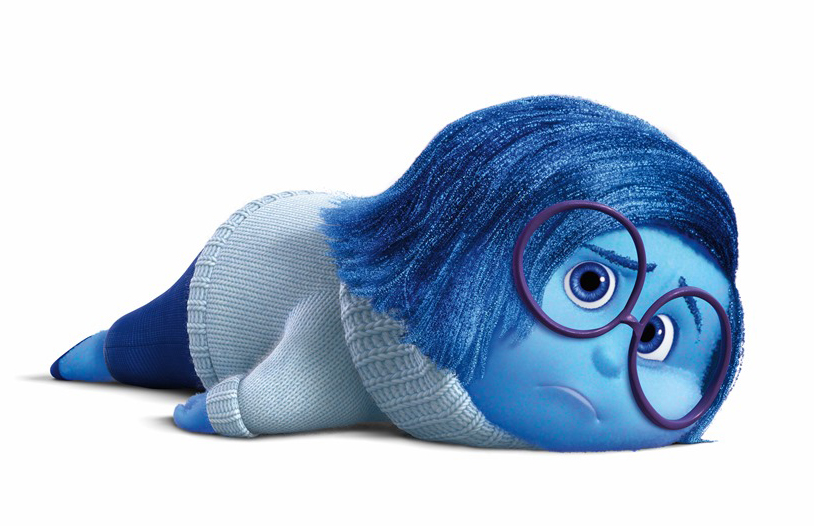
Sadness says, “Crying helps me slow down and obsess over the weight of life’s problems.”

That’s a yes.

_____________________________

The 2014 film THE BABADOOK has come to mean different things to different people…but to me, it will always be The Spot-On Description of Depression (…and, now, of Grief).

The Babadook. Be careful clicking on this. It’ll give you nightmares.

From the movie:

I’ll wager with you,
I’ll make you a bet:
The more you deny,
The stronger I get.

You start to change
When I get in —
The Babadook growing
Right under your skin.

The more I deny…the more I don’t talk about depression…the less honest I am about it…the stronger it gets. And, as you can see, it’s horrific.

____________________________

This one speaks to my anxiety. I’m learning that a lot of my little habits lead back to this.

“Fear” by Alexandria Lomuntad

____________________________

More here, another time.
June 27, 2017 / Courtney

i am so tired and i’m not okay (trigger warning: depression, anxiety, anger)

“Hey, how are ya?”
“How’s it goin’?”
“How’s life?”
“Whatcha been up to?”
“How are you?”

These are all variations of the same question. They all mean the same thing. They’re all delivered in the same tone. They all expect the same style of answer.

Tone: bright, casual, cheery
Style: superficial

In reality, this “how are you” is not a question, in spite of the punctuating “?” at the end.

It is not a question but a greeting.

It requires, expects, and prefers no other response but an equally bright, casual, cheery, superficial “fine.”

“Fine!”
“Great!”
“Just as good as it can be!”
“I’m blessed!”
“Nothin’ much, how ’bout you?”

I’m so tired of receiving that “greeting.”
I’m so tired of giving that response.

I was probably a young adult when I first became consciously aware of this particular difference between the American culture I was born into and the German culture I was raised in:

In American culture: “How are you?” is a greeting that requires little content in a reply.

In German culture: “How are you?” is a genuine request for a run-down on everything going on in your life and how you feel about it. It’s a conversation-starter never offered in passing.

If you’re a member of either culture visiting the other, you’re going to have a very tough time interacting with people if you don’t understand this distinction.

I’ve understood it for a long time. I’ve adapted. I never ask a German how they are if I’m not available to listen to the answer. When I ask an American how they are, I make sure I emphasize that I really want to know. If I don’t want to know, I don’t ask.

Sometimes I do use “how are you” as a greeting — but only in American society, and only when the situation obviously calls for that style of interaction. It’s still not my preference, though.

And I’m tired of hearing that greeting.
I’m tired of giving the standard “I’m fine” response.

Because I’m not fine.
I’m not okay.

I.

am.

tired.

I’m tired of not sharing openly and honestly about my struggles.
I’m tired of not sharing frankly what’s going on in my life.
I’m tired of not saying bluntly how I feel about it.
I’m tired of feeling like it’s not safe for me to be honest.
I’m tired of feeling fear and anger and frustration and sorrow more than I feel joy.
I’m tired of getting out of bed in the morning when I don’t want to get out of bed.
I’m tired of having neither the mental space nor the emotional energy nor the hours in the day to engage in all the things that make me come alive.
I’m tired of watching tv every single night because it makes for effective anesthesia.
I’m tired of eating chocolate just because it makes me feel better.
I’m tired of how fat and lazy and old I feel.
I’m tired of feeling afraid to talk about my true beliefs on social media.
I’m tired of not being able to say, “I am grieving, damnit! I feel sad, I feel angry, I feel guilty, and I don’t need anybody to fix it or try to talk me out of it.” (It’s not your job.)
I’m tired of feeling like my words never come across the way I mean them.
I’m tired of my “everyday” as something I feel I have to slog through instead of live to the fullest.
I’m tired of not feeling as resilient as I used to.
I’m tired of always being the strong one.
I’m tired of always being the one who listens.
I’m tired of always being the one who understands.
I’m tired of always being the one who empathizes.
I’m tired of having my faith questioned by people who don’t see my life inside and out on a daily or weekly or even monthly basis.
I’m tired of being accused of complaining.
I’m tired of being accused of being negative. (Guess what? IT’S NOT ALL SUNSHINE LOLLIPOPS KITTENS RAINBOWS SPARKLIES.)
I’m tired of hearing all the voices in my life and in my head that say I need to have Joy instead of depression.
I’m tired of the “norm” that compares my life to others’ and says, “Look, they have it worse than you, so you should be thankful and grateful and happy for what you have.”
I’m tired of hearing people tell me I should enjoy XYZ when I’m unable to.
I’m tired of feeling like a failure as a woman, as a wife, as a mother, as a writer, as a human.
I’m tired of so rarely having a real, deep, meeting-of-the-spirits conversation with my husband.
I’m tired of feeling responsible for everyone and everything.
I’m tired of never getting enough sleep, even when I work hard to arrange my schedule for getting enough sleep.
I’m tired of worrying about, oh, pretty much every single person in my life.
I’m tired of the lying bastard named Depression, who is utterly beyond my control and is NOT a sign that I need more faith, thank you very sarding much.
I’m tired of feeding Depression by not acknowledging its very strong reality in my life.
I’m tired of my brain chemicals and neurons not functioning in an ideal manner.
I’m tired of the To-Do List.
I’m tired of worrying about money.
I’m tired of thinking, as I write this, that I’m going to get criticism in response and experience emotionally radioactive fallout as a result.

I’m…just…tired.

And I’m not okay.

_____________________________

It seems needful to add that in all of this, I do not feel suicidal. My “I am tired” is not a statement of “I want to end things.” It is a statement of this:

I am tired and not okay.

I’m getting mad over being so damn tired and not okay.

I want change.

I’m not asking for solutions, so please don’t give me advice because I don’t want it right now. (Again: It’s not your job. If you’d like to pray for me, that would be most welcome.)

I needed to continue my process by writing these things out and making them public. That is the purpose of this post.

I said what I needed to.

My hope is that it’ll help me feel less tired.

Time will tell.

July 16, 2015 / Courtney

Here is my depression. Let me show you it.

“Wear a smile on my face, but there’s a demon inside.”

–from “Jekyll and Hyde” by Five Finger Death Punch

Don’t Google or YouTube that. (No, seriously. Don’t.)

I don’t for a moment think it’s a literal demon. Let’s just get that out of the way right from the start. I haven’t invited anything in, I haven’t been messing around with Ouja boards, I haven’t opened any metaphysical doors I can’t close. When I talk about having a demon, I’m not talking about being possessed. Because I’m not.

The “demon” is a metaphor.

So is the dark cave. So are: the quicksand, the black dog, the She-Hulk, the dark cloud of doom, the shadows closing in, the sludgy ocean. All of these are metaphors for the thing I’ve been dealing with that’s called depression.

This has been a long time coming

(and the cards are stacked…).

I’ve been disgnosed with depression, and I am now ready to talk about it.

Depressive Tendencies

As a teenager, I suffered depressive episodes during which I just wanted to curl up and stop everything. There was a lot of crying in the bathroom. I chalked it up to academic difficulties in school, relationship difficulties with friends, relationship difficulties with parents. Hormones. When I was 14, a psychiatrist told my parents I was “well-adjusted.” I took that to mean I could rest on my psychological laurels. Turns out I was just a good enough actress to fool a therapist.

In my 20s, I struggled through a long depressive bout that (I believe) resulted from my inability to say “no” and give myself the alone time I needed to recharge and recenter myself. Self-care has never come naturally to me; it’s always been Put Others’ Needs First, Second, and Third. Things improved when I learned to respect my need for solitude — and when I learned to require others to respect my need, too. Peace entered in when I listened to my spirit saying gently, “It’s okay to say no. It’s okay to take care of you. It’s okay. They’ll be just fine without you. Go do you for a while.”

I got better. I made the life choices I needed to make when I needed to make them. I became a full-time writer. I changed my eating habits and turned myself into a runner. It’s amazing what writing and exercise do for my spirit. There’s really no comparison.

Family History: Depression’s Descendant?

I won’t overshare here, because some things are not mine to share in public. Suffice it to say that there’s a family history of depression and anxiety. Nature or nurture? I believe it’s both, and that both get passed down through the generations. I have a great-great-grandmother who tried twice to stab her husband to death. Her daughter beat my grandfather. And so on and so forth.

Whatever it is, it goes back at least a hundred years. It gets diluted with each successive generation…like a poison poured into a glass of water, poured into the next generation’s glass, and the next, and the next. It’s diluted — I’d venture to say we can’t quite taste it anymore — but it still sickens us ever so slightly.

I fear for my daughter. I want her glass of water to run clear and fresh and pure. I know I can’t protect her fully. And yet, I refuse to give in to fear. “There is still hope,” as the elf-saying goes. I haven’t lost that.

Or rather, I lost hope for a while, but I’ve regained it.

The Demon Called Depression

On Death

I’ve never been suicidal.

Oh, there have been times when I wanted to be dead. The pain was great, and I wanted it to stop. I didn’t want to kill myself, never even pondered methods. I didn’t want to die, I just wanted to be dead because I wanted the pain to stop. And because I’m a Jesus-follower, I knew that part of what Jesus promises is “no tears” after this life. I desperately yearned for the “no tears” part. The “no pain” promise was for me, and if ever someone wanted it, I did.

So I prayed for God to take me — in a painless way, preferably while I slept, so I wouldn’t have a clue what was happening. I prayed he would comfort my family and friends after I was gone but reassure them they’d see me again. In the meantime, I would enjoy the lack of pain and sorrow.

But never once did I consider ending my own life. Was I still suicidal, since I was asking God to end it? I don’t know what the professionals would say, but I don’t think I was a danger to myself. I thought of myself in the light of the apostle Paul, who said, “If I live, I can do more fruitful work for Christ. So I really don’t know which is better. I’m torn between two desires: I long to go and be with Christ, which would be far better for me. But for your sakes, it is better that I continue to live” (Philippians 1:22-23).

If Paul could talk about wanting to rest with Christ, why couldn’t I?

Downward Spiral

From 2012-2015, I plodded on through a rough pregnancy, delivery, and post-partum recovery:

  • Mentally and emotionally, I was a mess because I spent most of the 9 months terrified I would miscarry. (I suffered a miscarriage in 2006; looking back, I have no doubt that a major depressive episode followed, possibly outright depression.)
  • During my first trimester one of our cats died unexpectedly and in a shocking way. (A botched spaying basically led to internal bleed-out and heart stopping). I grieved her loss as only a terrified, exhausted pregnant woman can. I haven’t really gotten over it yet.
  • I only threw up once the whole pregnancy, but from 10 weeks on I spent every moment feeling nauseated. Eating and drinking were anathema (unless I felt ravenous). Somehow, I managed not to get dehydrated.
  • During labor and delivery in September 2012, my tailbone broke. Thankfully, I had an epidural, so I didn’t feel it. But I heard it. And after the epidural wore off, I felt it. I felt it until, oh, April 2015 or thereabouts.
  • Four days after delivery, I visited the ER for ultrasounds on both legs to make sure I didn’t have blood clots. (I didn’t.)
  • Six days after delivery, I visited the ER again for an impacted bowel. I swear, you haven’t lived until you’ve had a cute little 20-something girl pump soapsuds up your–
  • Well, you get the picture.
  • Somewhere in there was a UTI.
  • Two months after delivery, I discovered that my toenails had died and gotten infected. Apparently this can happen as a result of physical trauma, because the body pulls resources from non-essential systems. They took a year to grow back normal.
  • Hair loss.
  • Baby weight that still hasn’t come off.
  • (Percocet for broken tailbone post-partum) + (sleep deprivation while caring for newborn) = hallucinations
  • Re-injury of back (torqued sacrum, to be specific) in June 2014.
  • 11 months total of physical therapy for spine injuries.
  • All the stress, frustration, worry, and guilt that go along with being a (new) mother.

And the stress, frustration, worry, and guilt refused to let up. Instead of decreasing, they increased. They turned into anxiety and anger. By January/February 2015, I was pretty sure something was seriously wrong.

Duh, you might say.

But have you ever been so close to a situation that you couldn’t see the truth of it? That’s a rhetorical question, because I know the answer is “yes”; not seeing the forest for the trees is pretty much a constant of the human condition. With everything I dealt with from 2012-2014, maybe it should’ve been a logical conclusion that I’d spiral into a major depression. But you know what? Maybe not. Maybe it wasn’t so obvious.

Maybe I’m just a good enough actress to fool myself in addition to fooling a lot of people around me.

Maybe my smile looked genuine enough in the mirror to fool even me into believing that a demon hadn’t taken up residence inside me.

Decision

About six months ago, I realized I felt angry pretty much all the time. I also cried a lot. I had no desire whatsoever to be around people. I didn’t want to leave the house for anything. I couldn’t get to sleep. I couldn’t stay asleep. I couldn’t wake up in the morning.

My thoughts were not normal for me:

“I can’t do this (read: anything, really).”

“I didn’t sign up for this kind of life.”

And, most telling:

“My daughter deserves a better mother than this pathetic one she has. I can’t do anything right by her.”

“God made a mistake when he made *me* a mother.”

Without getting deeply into theology, I’ll tell you this: the idea that “God Commits Errors” is not part of my belief system. If God chose to make me a mother (which I believe he did), then his choice was not an error. Intellectually, I was confident in this as Truth.

Emotionally, I railed at him for inflicting me upon this beautiful, innocent child.

My anger increased. And, to make a long story short (too late), most of that anger was nonsensically turning in the direction of that beautiful, innocent child.

That, my dear friends and neighbors, is unacceptable.

For her sake, if not for my own or my longsuffering husband’s, I had to change.

In May 2015, I saw my general practitioner, who agreed with my self-diagnosis of depression and prescribed Zoloft.

Defining Depression

Depression is sitting in a dark cave, curled with with your knees to your chest and your arms wrapped around your legs. You’re terrified to move, because if you move, Things Will Get Worse. You don’t know how or why, you just know that they will. You’re curled up in this dark, dank, miserable place, and you cannot see an exit. Your eyes are wild and wide, but you cannot see even the faintest hint of light. You are incapable of movement. You are incapable of reaching out or calling out for help. Somewhere deep inside, you hope that someone will reach in and wrap their fingers around yours and tug gently. If that happened, maybe you could follow that gentle encouragement back to its source, back to the light and the warmth and the real. But very few people know how to reach in like that. And even if they do, you find that all you can do is twitch in response. You can’t actually move enough to follow them anywhere.

Depression is a dark cloud of doom that hangs slightly behind you and overhead, always just out of sight no matter how quickly you turn to confront it. It never goes away. It follows you everywhere. It blocks out warmth and light. It is an invisible, intangible jailer, and it mocks you.

Depression is like you’re trying to use one potato to peel another potato. *If* someone offers help and you accept, you find that they’ve handed you another potato.

Depression is Sisyphus.

Depression is running through a dark, foggy forest full of pitfalls and sharp rocks and trees that reach out to grab you. A black dog with blood in his teeth is chasing you. You can’t outrun him. You can’t outsmart him. You can’t hide from him. Every time you throw a terrified glance over your shoulder, HE IS RIGHT THERE, tearing at your heels. You scream, and he howls in triumph. You can feel his damp breath and smell the rot that follows him everywhere. And no one can keep him off you.

Depression is a sweet voice pulling you further into the darkness with seductive whispers.

Depression is a rough, gravelly voice that beats you down with the “truth” that you’re not good enough, you’re a terrible person, if people really knew you, they would hate you, you’re worthless.

Depression is the She-Hulk, a rage always boilling beneath the surface, and once she breaks her bonds, you can do nothing to stop her. She takes over, grows to insane proportions, and destroys whatever is in her path.

Depression is quicksand grabbing you around the knees and pulling you into its suffocating embrace, and you can’t apply the anecdotal “fix” of stretching out flat on top of it and “swimming” to safety.

Depression is a vast, sludgy ocean that sucks you down and contains no life, and you can’t see a shore or lifeline anywhere.

Depression is dark shadows overlaying everything you see. (For some people, this is literal.)

Depression is a demon that lives inside you, an invisible disease of your will and emotions. The demon makes you smile when you don’t feel like it. The demon makes you participate in activities you don’t want any part of. The demon uses your body and your face like a meatsuit, playing at human life with the goal of keeping up appearances. The demon doesn’t want anyone else to know it’s inside you. The demon acts human so that no one will find out that it’s devouring your internal organs, eating you from the inside out. Only sometimes does the demon show its true face — and then only when it knows that the witnesses can’t (or won’t) do anything to cast the demon out.

“Depression is a mood disorder that causes a persistent feeling of sadness and loss of interest. Also called major depression, major depressive disorder or clinical depression, it affects how you feel, think and behave and can lead to a variety of emotional and physical problems. You may have trouble doing normal day-to-day activities, and depression may make you feel as if life isn’t worth living.

“More than just a bout of the blues, depression isn’t a weakness, nor is it something that you can simply ‘snap out’ of.

“A variety of factors may be involved, such as: biological differences, brain chemistry (neurotransmitters), hormones, thyroid problems, inherited traits, [and] life events.”

–Mayo Clinic

Dealing with the Demon

The day I got the prescription, I started taking Zoloft. My doctor warned that it would be weeks before I felt a difference, if I felt one at all. It could be months.

Maybe wishful thinking or psychosoma took over, but I swear I felt an effect within two-and-a-half weeks. There came a weekend where I looked back on the foregoing week and realized that I hadn’t cried or even felt like crying. Another week, and I found myself putting on real clothes and washing my hair and taking the toddler to playgrounds. By June, I wanted to be around people. In July, I found myself more active in our house church, and the sudden influx of family for a reunion didn’t send me into the fetal position.

Best of all, I was exercising patience with my child.

Selective serotonin reuptake inhibitors “increase the extracellular level of the neurotransmitter serotonin by limiting its reabsorption into the presynaptic cell, increasing the level of serotonin in the synaptic cleft available to bind to the postsynaptic receptor.”

–Wikipedia

Zoloft is an SSRI: Selective Serotonin Reuptake Inhibitor.

I remember learning about those in college psych classes. On exams, I never had trouble recalling anything I’d learned about them — because they sounded so poetic. Selective serotonin reuptake inhibitors. The words flow off the tongue in perfect sibilants and labials, consonants forming a lovely rhythm. The “reup-” diphthong encourages a perky, upward motion of the head as you speak, as though the word itself on your lips is part of the treatment. The entire phrase is a poem of the soul, designed to move forward, move along, move on, get past this, leave behind all the dullness and lack of melody.

These drugs I’m now taking, I used to think they were poetry.

I’m not a professional counselor, but I’ve had counseling training, and I’ve been in a position (by necessity) in which I’ve counseled others. Some of those others have suffered from depression. I took care not to offer anything in the way of “professional” advice; I always pointed those individuals toward the fully trained, the licensed, the practiced.

Still, I sat only on one side of the “desk.” I settled myself in the “chair” instead of on the “couch.” I functioned as counselor, not client. I was the listening ear and the shoulder to cry on — not the one to speak or to weep.

Now, suddenly, *I* am the one with the disease.

It is a weird and humbling experience, and I don’t like it.

It isn’t poetic or perky at all.

Suffering from depression represents yet one more fracture in my illusion of control. (All sense of control is an illusion; if you don’t believe this, you’re still in illusion’s grip. I recommend the red pill.) Maybe I didn’t offer advice…but as long as I sat in the chair instead of lying on the couch, I could at least fool myself into believing I was master of my situation. That belief, though ever tenuous, has now crumbled. I’m not adrift, as I remain in possession of my firm foundation, but I’m still at a loss to reconcile Who I Think I Am with this ill person who requires anti-depressants in order to function.

Like I said. It’s humbling.

Which isn’t a bad thing. Humility is never a bad thing. And through this whole experience, I am learning greater sympathy and empathy toward others who experience depression. That’s not a bad thing, either.

It’s just such a strange thing to acknowledge consciously and intentionally that I have a mental illness.

I have a mental illness.

I have a mental illness.

Decision

I do not say that I’m mentally ill.

Mental illness is not something I am, it’s something I *have*.

Just like I *have* neurocardiogenic syncope, premature ventricular contractions, a milk allergy, arthritis, scoliosis, hypermobility, and chronic sinusitis.

I am not these (mostly invisible) diseases and conditions. I have them, but they do not define who I am. I must deal with them on a daily basis, but they do not determine the nature of my person. And they certainly do not decide what direction my life goes.

(Speaking of those other conditions, though, I’ve noticed a pleasant “side effect” to the anti-depressants: I haven’t been experiencing nearly as many premature ventricular contrations since I started taking Zoloft. Instead of three per day, I’ve been feeling maybe three per week. This lovely development has led my cardiologist and me to cut my beta-blocker in half, with the goal of eliminating it altogether within the next few months. Since beta-blockers have some fairly onerous side effects, I am all in on getting rid of them.)

So. I’m not mentally ill. I have a mentall illness. It’s more than just a semantic difference to me. It represents my acceptance of this but also my determination not to let it rule me. I am not subject to depression. I do not belong to depression.

The demon does not own me.

Direction

I am aimed at and headed toward healthy.

When my doctor gave me the Zoloft prescription, she said, “We do not call these your ‘happy pills.’ If anything, we call these your ‘normal pills’ — because we’re trying to get you back to what’s normal for you.”

With her help, I came to realize that I’ve dealt with depression for at least three years, likely longer. The more I think about it, the more I wonder if I haven’t had some form of depression since the miscarriage in 2006.

When you’re just just trying to live your life from one day to the next, it’s difficult to step back and see the big picture (see: Forest for the Trees Syndrome again). It’s even easier to tell yourself this is just a temporary setback, I’ll get past this, it’ll be fine, tomorrow is another day, ad infinitum. But finally, I am seeing more of that picture and realizing that I’ve been treading water, close to drowning, for a lot longer than I’d realized.

The good news is, the dark cloud no longer hangs over my head.

The black dog no longer nips at my heels.

I have a potato peeler.

My organs are regenerating, and the demon’s presence has weakened.

I still have bad moments, bad days. In fact, as I write this, I am coming out of a particularly bad week. I missed some exercise days, and that has contributed to the lows. I also just published a novel 20 years in the making, and it took a lot of extra oomph I really didn’t have. But I gave it anyway, and then I crashed*.

The dark cloud no longer hangs over me, but I know it lurks beyond the horizon.

The black dog no longer nips at my heels, but sometimes I can still hear his howl.

My potato peeler isn’t always sharp.

The demon has weakened, but it’s still there.

I can hear it waiting.

And so, I do what I must to take care of myself.

I take time for me. Alone time. Writing time. Workout time. Friends time. These are all separate times, and I take them. It means being away from my family. So be it. I am a better mother and wife when I take time away from them.

I take my exercise. I run. I zumba. I don’t yoga as much as I’d like, but I’m working back up to it.

I take my meds. I’ve always had an aversion to taking pills. But I don’t mind taking these little blue ones at all. They make me feel that much better.

I take a step back. When emotions start to get the better of me, I take a step back and ask myself what I’m doing and whether I need to step out of the room. Sometimes I do, sometimes I don’t. Either way is okay.

I take these healthful resources because I need them.

This is where I am. No guilt.

I’ll stay here for as long as I need to.

PicsArt_1436986271278

*Vegging in front of the TV, watching “my boys“. They’re great therapy.
; )

P.S. I will see a therapist at some point, but I’m not quite there, yet. In time.

July 12, 2013 / Courtney

Depression and Creativity

The Depression Part

I’ve felt depressed lately.

Sad. Lethargic. Numb. Angry. Frustrated. Disinterested. Dark view of life. No hope. Blech.

I’ve blogged about depression before. And I’ve blogged about one of the main triggers of depression for me: not exercising my creativity.

When I realized that I was depressed, I said to several people who love me, “Hey, I’m depressed.” NOTE: Telling loving people that you’re depressed is helpful in starting the process of getting out of the depression.

Those several people who love me replied, “Hey, we’re not thrilled about this. Do you know why you’re depressed and/or how we can help?”

This was an excellent response for two reasons.

One, it let me know I’m not alone in this.

Two, it helped me figure out how to handle this.

You see, I had to answer them as follows: “There’s nothing that you can do, really. I have a baby whom I love dearly and deeply. I don’t resent her or begrudge her the time I spend with her. But the fact remains that when I’m taking care of her, I’m not writing. And when I do have time to write, I’m so exhausted that I fall asleep at the computer. There’s nothing anyone can do, really, to ‘fix’ this situation (which isn’t actually broken).

“However, having this conversation with you makes me focus on ways I can exercise my creativity in writing without sacrificing my daughter’s needs. So thank you for talking with me about this. That helped.”

The Creative Part, Pt. 1

And then I went and wrote a blog post, and I felt better. And then I invented a recipe for almond chicken, and while cooking doesn’t do a lot for me, it’s still a creative task, so I felt better after completing that, too. And then I reorganized two rooms and a closet, and the exercise in creativity required for that gargantuan task was a humdinger of a creative exercise, lemme tell ya. And then I made up a song about giraffes for my daughter and videoed myself singing it. After that, I was practically glowing.

So. I’ve felt depressed lately. But I’m on my way back up.

I still feel a ton of frustration that I nod off every time I sit down to continue my WIP (Elevator People). But at least I’m doing little creative things here and there. I think I just needed a reminder not to neglect that part of myself — and not to let exhaustion fool me into thinking I don’t have time for that part of myself.

After all…crippled, demented, or crushed: still, I will create.

The Creative Part, Pt. 2

And then, my friend J.T. posted the following on his Facebook status, and I thought it was utterly brilliant:

“Art is not about talent or skill. Art is about you. Spending time with you, getting to know you. Seeing parts of yourself that you love, some that you hate, but mostly parts that scare the very breath from your lungs. Art is not about technique or style. Art is learning who you are, and being brave enough to show the world. You can’t be bad at art, unless you are simply afraid to try. Art is a terrifying pursuit, because there is nothing more frightening than our own selves.”

~J.T. Hackett, artist

I’ll be blogging about J.T.’s ideas more in the near future. But for now, here’s how I’m relating his words to my depression:

I need to know who I am.

When I don’t know who I am, I get depressed.

When I am not creating, I am not spending time with me, not getting to know me.

When I am not creating, I am not seeing myself fully.

When I am not creating, I forget who I am.

When I forget who I am, I get depressed.

I could flesh this out a bit more, but I think it suffices for my current purposes. More than ever, I see the truth in my belief that I am created to create. To dig more deeply: I am created to get to know exactly who I am. If I am not doing art, I am not getting to know who I am.

If I am not doing art, I am neglecting a main purpose for which I was created.

No wonder that sets me adrift.

I am finding my anchor again.

Cures from the Past

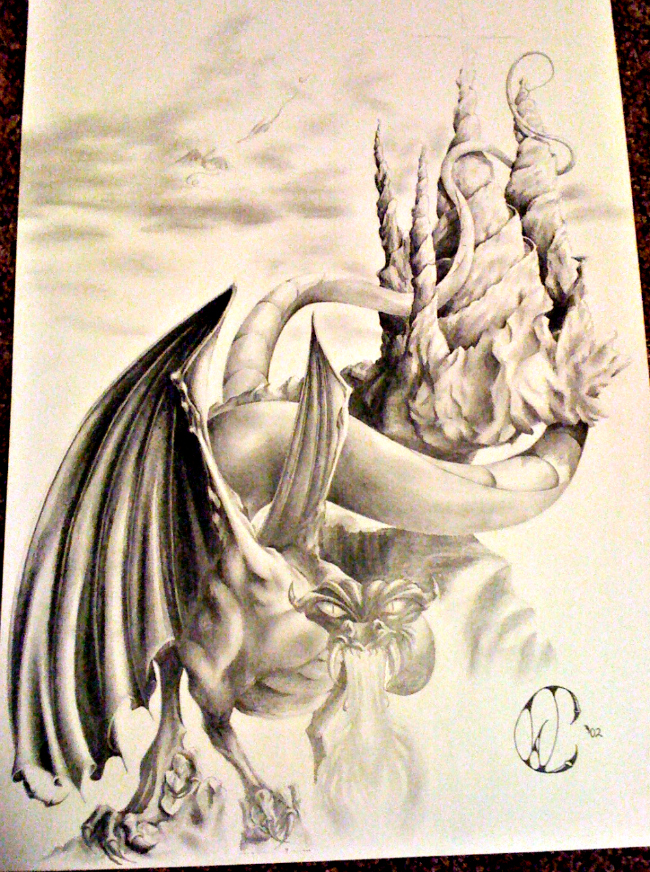
"Castle in Her Coils" by Courtney Cantrell
“Castle in Her Coils” by Courtney Cantrell
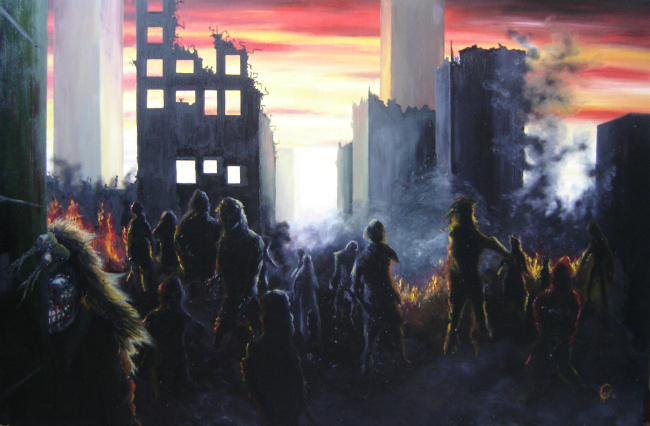
"No More Room in Hell" by Courtney Cantrell
“No More Room in Hell” by Courtney Cantrell
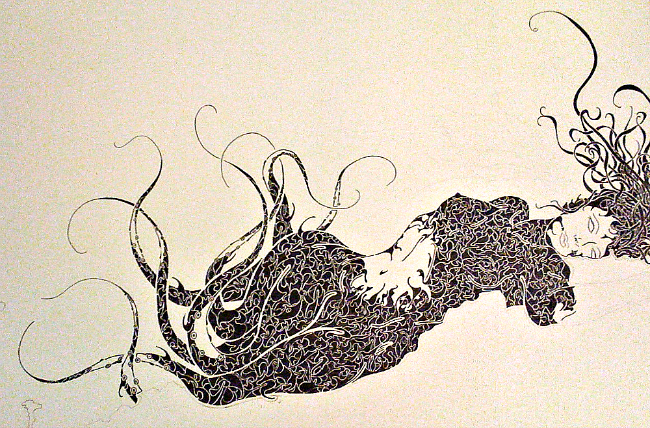
"Sea Creature" by Courtney Cantrell
“Sea Creature” by Courtney Cantrell
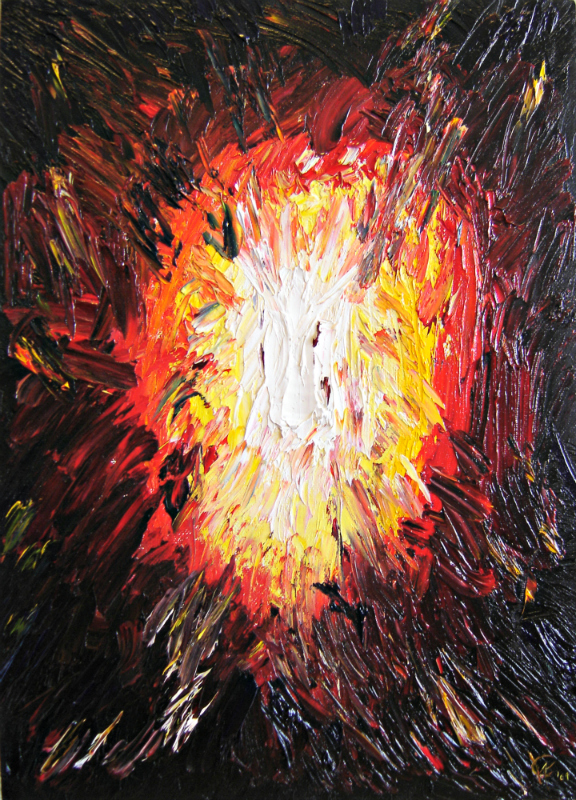
"Redemption" by Courtney Cantrell
“Redemption” by Courtney Cantrell
April 14, 2013 / Courtney / Writing

Here’s a poem about sacrifice, depression, and empathy. I think.

In celebration of National Poetry Month -- which is NOW, if you must know -- fabulous Edinatrix Laurie Laliberte is hosting a Poetry Slam on her blog. Today, she happens to be featuring a poem by Yours Writerly.....

Of course, you might decide it’s about something else entirely. Interpretation is entirely your prerogative.

Anyway! In celebration of National Poetry Month — which is NOW, if you must know — fabulous Edinatrix Laurie Laliberte (@LaliberteLaurie) is hosting a Poetry Slam on her blog. Today, she happens to be featuring a poem by Yours Writerly. You can probably guess that this really swings my verge and flips my bangerang switch.

So, head on over to Laurie’s blog and read my poem that might or might not be about sacrifice, depression, and empathy.

Feedback is always welcome! : )

November 2, 2025 / Courtney / Inspiration

the very worst

So.

I am truly, without a doubt, the Very Worst Self-Marketer.

Why?

Because my latest book has been out for weeks and I haven’t said anything.

Prolly ’cause depression & anxiety have been getting the best of me. I haven’t been tending to The Babadook as I should.

(ICYMI, “Babadook” is the name of my mental illness, which worsens when I don’t set it a place at my table.)

Can’t celebrate a book when the ooze and goo are cementing you to the pavement.

October is usually my worst month, even though autumn is my favorite season.

I just don’t get to enjoy it until Halloween arrives. Going into the darkness the eerie the creepy the weird (the evil) the ludicrous always pushes me through to the cozy waiting on the other side.

On the other side, that good feeling never lasts…but I no longer expect it to. I nestle into the cozy and prepare as best I can to go dormant.

Y’know, like every creature in the northern hemisphere other than the modern human.

This is the season in which living counter to capitalism is most vital.

Like the trees, the squirrels, the bees, and the snails, at this time of year we’re meant to slow down, stay safe, preserve energy and sustenance. This year-round go-go-go rise-and-grind hustle culture is antithetical to how we’re put together.

I practice living intentionally counter to that. *Practice*. Because I’m not there yet. I never will be. But practice makes progress.

In which progress means doing less. Doing smaller….

In the practice of going dormant along with nature (because there is no objective difference between nature and human; we are a part of her; we are her), progress means *not* the more of what our capitalist world violates us with.

Progress = less.

So I get through October, descending into darkness. Despairing, almost. But the only way out is through. And Halloween has come to mean THRESHOLD to me.

The threshold is an invisible barrier thick as gelatin. Pushing through means pain and tired and tears and miserable and ache and loss and grief. But I push through, and I get out my wild costumes and my glittery makeup and my ridiculous high heels, and I dance my way through ghouls and goblins and spooky scary skeletons, and I come out on the other side ready to shed what does not serve me in this season.

I nestle into cozy, and I remind myself every day to quit the frenetic pace, to quit the activity, to quit. And rest. And re-create what does serve my being a human in this universe.

What *does* serve?

-settling into my senses: in this moment, what do I touch? what do I hear? see? taste? smell?

-breathing: a daily practice of i n h a l i n g as slowly as I can — h o l d i n g — e x h a l i n g as slowly as I can, repeating until my nervous system calms

-water

-sleep

-sunshine when I can get it

-reading

-listening

-kindness to myself and my self, to others and their selves

-boundaries: when rest is on the schedule, I won’t allow myself or others to fill that slot with anything else

-returning again & again (because I am highly distractible) to the *practice* of intentionality, of clarity, of gentle planning, of soothing words to my self when the plans change perforce or go awry

-attending to the trees as they lose their leaves and seem to die, as they look stark and bleak as though joy and vivacity will never return — and reminding myself that depression is a lying bastard — and sinking calmly into the warmth of my surroundings and *waiting* because it is okay to do so

-reminding myself to accept that I am accepted

-allowing myself to smile and even laugh, and saying to myself, ‘of course, of course,’ when things do not go as I wish them to (because they won’t)

-and all shall be well and all shall be well, and all manner of things shall be well.

XOXO

September 23, 2024 / Church of the Contradiction

current status and todd mcgowan; or: of social media and aliens

Once again, it’s been a hot minute since I’ve blogged. Is that still a thing? Can minutes still have temperature? Or is that just slang of the Olds? For someone who spends as much time on the internet as I do, I am not current on slang among the kiddos. On the other hand, I do have some concept of what “skibidi” is. At least I have that going for me.

It’s scatting, right?

Speaking of time on the internet, part of why I’m blogging as we speak is that I’m attempting — once again — to limit my time on social media. Specifically Instagram and Mastodon, since those are the only socials I use. Neither of them is inherently bad — it’s just that for me, they suck me into a brainspace where things tend very quickly toward black & white, right & wrong, in the club & out the club, etc., and all the outrage and anxiety that sort of stark binary tends to produce. In me, anyway. YMMV, as per uzhe (which, if you don’t know, is slang for “usual”).

My brainspace is none too great these days, because I was sick with random mild viruses twice during July, then caught COVID on August 1st and spent 16 days in bed-ridden quarantine. Lemme tell ya, even this introvert was desperate and despairing for significant human interaction by Day 5. It’s a myth that introverts don’t like people or don’t like being around people. That is the definition of a recluse or, at worst, a misanthrope. Introverts, on the other hand, simply get their energy from alone time. Alone is when we best fuel up mentally and emotionally, which then allows us to go be with people and actually enjoy ourselves. It’s when we don’t get that regular alone time that we turn churlish.

Anywhich, all of that to say that 16 days of seeing nobody but my masked husband and my masked child, and each only sporadically and briefly, was a major blow to my mental health. That, plus being so very sick for so long. COVID also triggered the chronic sinusitis, so in the midst of my 16-day misery, I was also on antibiotics for a sinus infection.

The end of quarantine didn’t mean a return to normal, though. I was ridiculously weak, both from fighting the virus and from muscle atrophy. I was still sleeping most of the day. And the brainfog was unbelievable. Then, right as I was starting to feel a little better, the kiddo brought home another respiratory virus and I caught it. Which of course triggered another sinus infection necessitating another round of antibiotics.

I really, really need that septum surgery, y’all.

Today, I finally feel like the sinus infection has almost passed. But I overdid it this past weekend and the few days prior, prepping for and throwing the kiddo’s birthday party. Now, I feel weak and tired, and at some point in the proceedings I strained my left inguinal ligament again. That pain isn’t too bad, but it’s another frustrating setback.

ALL OF THIS TO SAY that because I’ve been sick and/or severely weakened for the past 77 days; have spent much of that time in shallow interactions with others or no interactions at all; have been in my head A LOT; and haven’t been physically able to engage in Zumba or weightlifting, two of my main activities for staving off the Babadook — my anxiety levels have been through the stratosphere, and depression has spiraled me lower than I’ve been in well over a year. Both anxiety and depression have been lying to me about what’s happened to me and what I need to concern myself about. And I’ve been listening, because I’ve been too weak to do anything else.

I am so sick and tired of being sick and tired.

And I have been terrified to go around people, which has led to al sorts of delightful crisis management schemes in my brain, none of which were reasonable or healthy. It has not been a fun time up in there, y’all. Anxiety especially is its own kind of virus — and what’s extra insidious about it is that it’s contagious.

This past weekend, though, I might have turned a mental and emotional corner. Seeing my therapist last Thursday helped. Later, talking it all through with a close friend helped tremendously. And somehow, even the kiddo’s outdoor birthday party helped. I got to do an arts & crafts activity with a group of particularly creative children, and that’s probably the best treatment for anxiety and depression I could’ve had at the time.

Thus, I am limiting my time on social media and blogging here instead. Which leads me to Todd McGowan.

Together with a bunch of other folks, I’ve been discussing McGowan’s EMBRACING ALIENATION — WHY WE SHOULDN’T TRY TO FIND OURSELVES in an online book group led by Peter Rollins. The group is great, and I enjoy the challenging and insightful discussions. I wish we didn’t all live scattered across the entire globe.

The book itself is great, too — although, as I told the group, “I read Todd with a desperation to understand what the hell he’s talking about.” HA. The group as a whole discussed Chapter 2 yesterday, and though I was online for part of the conversation, I only finished Chapter 1 this morning. In the past, I have told fellow writers that “sentences are not mini-vans,” meaning that not every possible available word must be packed into them; sentence-ending punctuation is your friend. That said, McGowan’s every sentence is a mini-van packed not with excess verbiage but with a plethora af deep concepts I have to think through before I feel I comprehend what the sentence is expressing. I have to re-read almost every paragraph and underline and circle key words and phrases in order to see how it all fits together. It is by no means a slog, because I’m enjoying the read. But it is challenging.

The lingering viral brainfog has not helped. But that, at least, is finally clearing. As I finished Chapter 1 this morning, I realized that I wasn’t needing to re-read quite as much….

What prompted my desire to blog some McGowan was something I read this morning. He writes:

Identity consists of the various social positions that one occupies: job, familial status, religious affiliation, political preference, ethnicity, and so on. No matter how much I see myself as any or all of these identities, I am never fully identical with them. This failure is subjectivity. No matter how I might mold them to fit myself, none of these identities can fully coincide with my subjectivity….
Subjectivity is undefinable. Who we are as subjects is a problem that has no solution…a question that has no answer. Symbolic identity of whatever stripe — man, woman, Chinese, Italian, Hindu, Muslim, lawyer, dentist — constructs an answer to this question, a solution to this problem…. But no matter how much effort I expend to identify with a symbolic position, I cannot traverse the distance between my subjectivity and this identity. I’m left with a failure to fit in….
All identity is conformist.

–Todd McGowan,
Embracing Alienation,
pp. 10-11, 12

So. Each of us is a subject. Not in the grammatical sense, here (with verb and object). In this sense, I am a subject because I am not my various identities. I identify as female, as a writer, as a wife, as a mother, as a friend, as a confidante, as a daughter, as a wyrde individual, as a seeker, as an a/theist, as a person who deals with various chronic illnesses, as a dancer of Zumba, as a gardener, as a painter, as a hobby linguist, etc, etc, etc.

But my “I” is not equal to any one of those identities.

Each of those identities is a symbol. Every time I say “I am a writer,” I am calling up a host of ideas, thoughts, concepts, practices, experiences that all belong to The Definition Of “Writer”; these are all things that manifest (demonstrate) my writerness or the ways in which I possess writerness.

But at the same time, “I am a writer” also calls up a host of ways in which I do not possess writerness. “Writer” is a symbolic identity. And who I am will never be exactly what “Writer” is; who I am will never wholly possess writerness.

The same, by the way, holds true for “I am Courtney.” Every time I say that, I am standing at a distance from “Courtneyness” and pointing at it to claim it as my identity. But it is not the whole of my identity. There is always going to be a part of my identity that the word (or signifier) “Courtney” cannot express. There is always going to be a part of my identity that the signifier “Courtney” negates. Opposes, cancels out, is not equal to.

Every affirmation requires negation.

Every time I say “I am Courtney,” I am also saying “I am not Courtney.” Reversing those is valid too: when I say “Courtney is who I am,” I am also saying “Courtney is not who I am.”

This not-being-at-one-with-self, this inner dislocation, this lack of completely identifying with self — it’s called “alienation.” “Alien” comes from the Latin “aliēnus,” which means “belonging to another person, place, or object.” We all harbor an inner foreignness to ourselves.

Whatever your name, familial statues, friendship status, profession, religion, worldview, politics, hobby — not a single one of those will ever signify who “you” is. If you say “I am an underwater pizza deliverer,” you are also saying “I am not an underwater pizza deliverer” or “underwater pizza deliverer is not who I am.”

“I” is not reducible to who I believe I am or to the signifiers I claim.
“You” is not reducible to who you believe you are or to the signifiers you claim.
“They” are not reducible to who they believe they are or to the signifiers they claim.

There is always more to each of us than the signifiers (words and phrases) we use to describe ourselves. What really bakes the noodle is that we know only some of what the “more” is. A truth of every human is that there will always be part of our identity that we’re not even aware of. And the scary, thrilling, beautiful part is that the people around us are more aware of that part than we are. The people around us hear our words and see our behaviors, and those words and behaviors are the outward signs of the things we don’t know about ourselves. This is one reason why the people we dislike the most are often our most accurate mirrors. (And sometimes, the reason we dislike them in the first place is that the mirror is too accurate for our comfort.)

This is why none of us can know even part of who we are unless we’re in relationship with other people.

I think about these things, and I want to deny them. On an intellectual level, I have seen, heard, and experienced enough for them to ring fully true to me. But on an emotional level, I still freeze like a deer in headlights, panicking with anxiety. That’s part of why my anxiety has been so high recently. It’s not just the danger of COVID or of Long Covid or of any other damaging viruses. It’s (primarily?) the fear of accepting these things as true, the fear of embracing my alienation.

I’ve been so terribly scared to move…when what I need to fear is the lack of movement.

Last week, I shared these fears with a friend who listened, let me know he understood why I was feeling that way, and then told me the blunt truth about myself.
That I’d been in a closed-loop brainspace that did not allow for reality, hope, or joy.
That anxiety and depression had been lying to me and I’d been listening.
That I had been choosing the fear.
That I could choose to stop feeling frozen.
That chasing the greatest possible safety was yet another example of my chasing the perfect instead of the creative, the hopeful, and the joyful.
That I could move.

I won’t say that this one conversation fixe everything. As I told my friend through tears, “I don’t know how to just let go of this.” The anxiety freeze and the depression spiral are still there.

But.

I do think their power is lessened. Their attraction less magnetic. Their pull weaker.

I have been humming again as I go about my day.

I’ll take it.

A question I have now is:
Yes, in a significant way, I do know that I don’t know who I am. I do know that I am alienated from myself.
So, how do I go about engaging with peopole who don’t know that they don’t know who they are? who don’t know that they’re self-alienated?

And the beginnings of an answer come to me in the memory of my friend, who offered me kindness and warmth but also did not pull any punches…my friend who gave me such extraordinary grace:

“What grace is given me, let it pass to them….”

April 27, 2024 / Church of the Contradiction

casting pearls before ostriches

“Let me tell you why you’re here. You’re here because you know something. What you know you can’t explain, but you feel it. You’ve felt it your entire life, that there’s something wrong with the world. You don’t know what it is, but it’s there, like a splinter in your mind, driving you mad. It is this feeling that has brought you to me. Do you know what I’m talking about?”

Well? Do you?

The 1999 film The Matrix is one of the most true stories I know. No, I don’t believe it actually happened. But a story doesn’t have to have happened, it doesn’t have to be fact for it to be true — that’s why we humans need Story so desperately, always.

But the nature of truth, fact, and Story is only an aside for now. What I want to dive into here is the thought that we humans are all exactly like Neo, the main character of The Matrix.

In case you need a Matrix refresher: hapless Neo faces the choice between sinking into senses-numbing drudgery or following his instinct that tells him something is awry with his reality. He chooses to plunge down the rabbit hole, of course, because otherwise there would be no story. And, of course, Neo discovers that he was right all along: his universe was a sham, and Reality is more horrific than he ever imagined.

And here’s the main Truth I find in The Matrix, a Truth I believe: each and every one of us humans is Neo, and on a deep, visceral, maybe even cellular level, we all know there is something wrong with the world.

And by world, I mean the Greek sense: the cosmos. We know that there is something wrong with the universe. There’s something missing. At its very core, everything contains an absence. And this absence is so profound and insists so intently, it is as a presence. It is the Presence of an Absence. A gaping void. A space in which there is Nothing. An Abyss.

And it terrifies us at a depth so profound, it defies description. In terror, we perceive the Abyss — and we rush to fill it.

Think different.
Just do it.
Doers get more done.
Have it your way.
You can’t eat just one.
No rules, just right.
Taste the feeling.
I’m lovin’ it.
There is no substitute.
Let’s go places.
Belong anywhere.
The happiest place on Earth.


That was easy.

Sex, drugs, and rock’n’roll. Or whatever genre you’re into of interactions, substances, and music. Sports. Academics. Technologies. Toys. Systems. Food. Shopping. More on all of that later. The crux is that we find the Abyss disturbing and horrifying. And we will do pretty much anything to make up for its us-shattering trauma.

Take AI and gambling, for instance. (I recently watched a video by Peter Rollins in which he said something about gambling, which is what springboarded this post.) AI and gambling each are just another method for trying to fill the Lack. (But how do you fill up an Eternal Depth?) Gambling isn’t addictive because of the money won. What the gambler is addicted to is the fantasy of winning. And what humans find so compelling about AI is the fantasy that this can make our lives better. Sure, some people find AI compelling because they believe it’s lucrative. These people are the equivalent of casinos.

The casino knows very good and well its clientele isn’t going to get rich off playing roulette or the slots. The casino isn’t selling the opportunity to play. No, the casino is in the businesses selling the fantasy. That is the casino’s product. In the same way, the creators of AI are in the business of selling the rest of us the fantasy that AI will fix things. Figure out better systems. Solve our unsolvable problems. Help us. Serve us.

That’s the dream, right?

But AI won’t.

Fulfilling your dreams only shows you that your dreams can’t fulfill you. AI won’t fix things. Gambling won’t fix things. Addiction to the fantasy of them is nothing more than that: an addiction to something that does not exist but only mimics the function of what we believe should exist.

None of the “fillers” we try will ever fill the Abyss, that alienation at the core of everything, that self-dividedness of Reality itself. The Void that horrifies is infinitely wide, eternally deep, and categorically unfillable.

Gambling won’t do it. AI won’t do it. Neither will sex
or a pleasant marital life
or essential oils
or yoga
or your power smoothies
or weed
or your perfect landscaping
or that car you’ve been wanting
or the fresh coat of paint on your kitchen walls
or that house that has all the right features
or that better-paying job
or that bottle of whiskey
or that art project
or that ‘fit
or that candidate
or that political party
or that hire
or that person getting fired
or that interaction on social media
or that newspaper
or that pothole finally getting repaired
or that ADHD medication
or that grocery store
or that college acceptance letter
or that religion
or that rejection of religion
or that deity
or that magic system
or that holiness practice
or that flag
or that defendant being found guilty
or that book
or that celebration
or that pet
or that friendship
or that dessert
or that curriculum
or that mattress topper
or that amount of money
or that birth
or that death
or that sentence
or that phrase
or that word
ad infinitum.

None of this will fix us. None of this will fill us up. None of this will save us. None of this will silence the niggling voice in the back of your head that says something is missing, something is wrong, and none of it will eliminate the abject terror that accompanies the conscious or unconscious realization of this.

People don’t really ask me anymore why I have depression and anxiety. And a lot of people who know that I was diagnosed with ADHD last year have yet to ask me anything about it. And I don’t think any of that is an accident: it’s just “easier” for “all of us” if we just don’t talk about it.

But even though they don’t ask verbally, I still hear the unspoken questions in so much of what they say to me. I hear the questions that imply doubt about the validity of these co-called “disorders.” I don’t think anybody believes that I’m faking it. But there seems to be an unspoken thought that maybe, in my efforts to find something that will fulfill me, I have latched on to these diagnoses as explanations for why I am not whole and complete; maybe I have imagined up a lot of connections that aren’t there, simply so that I have something to hold on to in my weakness and confusion.

But I disagree with that premise. I disagree that what I have done in identifying my symptoms and getting help for them is an effort to stave off the reality of the Lack in the universe. I hear those unspoken questions, and I don’t verbalize my internal answer to those questions:

How the hell are you not anxious and depressed? Have you seen this universe? HAVE YOU SEEN WHAT WE’RE LIVING IN?!?

Anxiety and depression are a natural, healthy response to the state of the world. And it isn’t just that trickle-down economics was a lie. It’s not just that we used to have chattel slavery in most of the world and entire demographics are still feeling the generational trauma of it, and now we have sex slavery in most of the world, or maybe we always have had and still have both and that truth is just hidden from those of us privileged enough to be removed from it. It’s not just that there’s a narcissistic hack in charge of a major technology company trying to control global communications. It’s not just that the chick on her cell phone cut me off in traffic. It’s not just that the neighbor’s cat won’t stop digging up my irises. It’s not just that fascism is on the rise in a blatant and mocking disregard for NEVER AGAIN. It’s not just that the white guy with the pistol in his waistband at the local Walmart might just decide to start taking potshots at the rest of us shoppers. It’s not just that there’s a WAAAAAAY greater than zero chance that some arrogant, neglectful parent is gonna enable their kid to bring guns to my kid’s school and shoot her and her trans friend to death. It’s not just that people stab each other in the back and beat each other and kill each other and gossip about each other. It’s not just that a gross number of grossly unregulated megacorporations are cooking this planet to death. It’s not just FOMO or passive-aggressive ghostings. It’s that, like Morpheus said and Neo finally woke up to, THERE IS SOMETHING FUCKING MISSING IN THE COSMOS.

In the Matrix, plenty of people stay blissfully unconscious. They live out their fake lives with their fake friends and their fake families in their fake homes, going to their fake jobs interspersed with their fake vacations and eventually taking their fake retirements, hardly even once realizing that there is something deeply amiss. If their radar ever blips, it’s for the briefest of moments, and they shut that radar off faster than Neo can dodge a slap from Agent Smith. No questions. No doubts. Sucked under in a riptide of experience and plodding.

Then there are people like the character Cypher, who is completely awake to reality but desperately wants to shut that part of himself down again. I know this steak isn’t real, but it tastes real, and I just want to eat it and enjoy it and be happy and go back under so I don’t have to deal with messy Reality anymore.

The blissfully unaware, I can countenance. But I simply canNOT with the Cyphers. That choice, y’all. That despicable choice….

And then there are those of us with anxiety and depression. There are those of us with ADHD. My feeling anxious and depressed when I consider the state of the universe is a natural and healthy response. When I finally realized that I’ve been dealing with ADHD my entire life, so much fell into place. And I have come to believe that all of us who have it are the prophets of our times.

Yes, I do hold the opinion that ADHD has always been present in human populations. And I understand that it seems more prevalent these days because everybody and their dog is getting diagnosed with it. Part of that is simply the Science World having more tools for identifying it, as well as Earth’s “growing” smaller and smaller as more and more of us forge more and more digital communications crossing time zones, language and cultural barriers, and fear-based controls. But all of that, too, is another story and shall be told another time.

What’s key — and revelatory — for me right now is how the nature of ADHD stands out against the backdrop of the state-of-world I’ve described above. Those of us who have this “disorder” (and I have a whole nother post [or series?] to write concerning my thoughts the “disorder” misnomer) — well, we’re just built different. HA!

Our dopamine levels are naturally low. Our interests are varied and weird. We don’t have the capacity for focusing on all the things that “the Matrix” uses to keep people asleep. I don’t have enough dopamine in my brain to pay attention to all of the voices and experiences and circumstances that tell me to lose myself in shopping or sex or religion or alcohol or money. That ad infinitum list of “fillers” might distract me briefly — but I blink, and my attention has flickered on to something else. Sometimes I would love for a “filler” to hold my attention long enough for me to lose myself in it — it seems restful. So damn it, yes, I guess I have a little bit of Cypher in me after all, a part that would just like to go back to sleep.

But I have seen, and I can’t unsee. Ukrainian philosopher Julie Reshe says that teens go through a crisis because they grow into the awareness of the death of God, a symbolic expression of their separation from their mothers. In a similar way, some people experience a “midlife crisis,” a time during which they realize that their lives are not what they dreamed or expected, and it throws them into a whirlwind of trying to find The Thing That Will Fix All The(ir) Things. Reshe says that this is the season of life in which humans become better able to recognize the Lack in all things, and they panic.

We ADHDers spend our entire lives in “crisis,” because from childhood we have felt keenly in body and mind that something’s missing; there’s a disconnect; we’re tangibly alienated from our peers — and there’s no fixing it. Attention Deficit Hyperactivity Disorder — or, as mental health advocate Connor DeWolfe more accurately names it, Dopamine Attention Variability Executive dysfunction (DAVE): either way, it’s the Lack in Reality personified in a human Lacking dopamine. A human whose very nature points toward the Abyss.

No wonder “neurotypicals” often feel uncomfortable around DAVEs.
DAVEs are the uncomfortable prophets.

The function of a prophet is to speak the words of God. And what is the definition of this word “God”?
“God” is the name we give to that which we can never accurately describe.
“God” is the name we give to that than which nothing greater can be conceived.
“God” is the name we give to that which remains ever unfathomable, impenetrable, incomprehensible.
“God” is the name we give the Unknowable.
“God” is the name we give to the oscillation at the heart of All Things, the oscillation that prevents everything from being at one with itself.

“God” is the signifier for the Lack in the universe. “God” is the signifier for the Abyss.

I feel like those of us with ADHD and/or anxiety and/or depression are people whose very existence communicates the words of “God” to humanity.
We the depressed, we the anxious, we the dopamine-lacking, we are all speaking with the voice of the Lack, the voice of the Abyss, the voice of the Nothing that says, wake up to Reality, stop denying that you aren’t whole. Stop denying that you aren’t complete. Stop denying that neither is Reality.
Those of us who respond with depression to the state of the universe, the planet, the nation, the neighborhood — we are the indicators that it’s time to wake up and pay attention.
We depressed, we the anxious, we the dopamine-lacking, we are delivering unto you the message from the Abyss that says, Yes, I AM. The Abyss Is. And I live in you and I live in everyone else and I live in everything else and I AM the Inherent Part of the universe and in me there is grace.

Grace isn’t some external merciful force that refuses to punish you when you deserve it. Grace is a radical encounter with and an embrace of the trauma that is the universe…and of the trauma that is you. Grace is your acceptance that you are accepted. Grace is you acknowledging the reality that you are not and cannot ever be whole and complete, that the universe is not and cannot ever be either, and that you do not have to do anything to change this. We depressed, we the anxious, we the dopamine-lacking — we are, in our weird and varied and frustrating ways, imparting unto you the truth that you are liberated. You don’t have to pursue happiness. You don’t have to pursue fulfillment. You can simply be you. You can simply be.

And in communion with others who gather together — not around something we share but around that which we all Lack — you can take your head out of the sand. You can bring forth your truest, most vulnerable Self from the covert where you perforce had to hide it.

And this is true for each of us. Communing in a space where each of us can simply be…without frenetically searching for an all-encompassing solution to our terrible Lack or even to our personal problems…we can wake up from the “Matrix,” plunge ourselves into the mess that is existence and Life Abundant, and both give and receive genuine care, concern, and compassion.

This is what we all need: a harbor for each other’s Lack. We fear the Abyss, the Lack in Reality. We also fear the Lack in each other. We fear the Other’s otherness. We need a haven for this otherness, for the endlessly deep dimension of the Other.

In this consideration, atheism is a closing off of oneself to the face of the Other with the Other’s terrible Lack.
Conversely, theism is the opening of self to the horrible, Lacking otherness of the Other, especially when you assent to the Truth that every word and action, every smallest molecule of every single Other is screaming, “Please do not hurt me. Please do not kill me. Please hold yourself back from annihilating me.”

The word “annihilate” comes from the Latin for “I reduce to nothing.”

That is what we are all screaming at each other everywhere, all the time: “Please do not reduce me to nothing.”

The depressives…the anxiety-riven…the ADHDers…other neurosparkly folks — all are signposts pointing to The Gap In All Things, the Lack…the Abyss we’ve slapped a label on that reads “God.” We’re pointing in the direction of the Abyss, and we are not prophets of hope. We aren’t the kind that say, “You’re screwed right now, but if you do XYZ you can avert disaster and be saved.”

Nope. We are prophets of the apocalyptic sort: apocalypse meaning revelation that alters and transforms. Our message is “you’re screwed, you’ve always been screwed, and you’ll always be screwed — AND THAT’S THE GOOD NEWS. That is the GODSPEL.”

Because if screwed — self-divided, alienated, Freudishly castrated, Lacking — is the essence of our nature, then we truly are free.

This is liberative. This is salvatory.

We don’t have to move from Point A to Point B, because A isn’t what we thought it was, and B does not exist. Grace says: “I shall not try to fix you, because you do not need to be fixed. You are accepted; I invite you to accept that you are so; and in care and concern and compassion for you, I make a space for you to be.”

And if be morphs into becoming — well, we don’t turn up our noses at happy little accidents.

“Do you know what I’m talking about?”

September 28, 2023 / Courtney

this is not my favorite part

Y’ALL.

It has been a helluva past six months.

Kid finished 4th grade and, therefore, elementary school. I dyed my hair. Kid and I spent half the summer sick with various and sundry. My irises were gorgeous. We camped in the back yard. Grandma fell and couldn’t live at home anymore. We rode horses. I got stung by a wasp. Kid made her first short film as scriptwriter and director. Delightful float trip with friends. More illness on kid’s part. More illness on my part. Hard but glorious conversations. I set up an Etsy shop. Kid started 5th grade at middle school. I dyed my hair. I painted. I wrote. I painted and wrote some more. I held a lemur and got my second tattoo (those two events were not related). Kid turned 11.

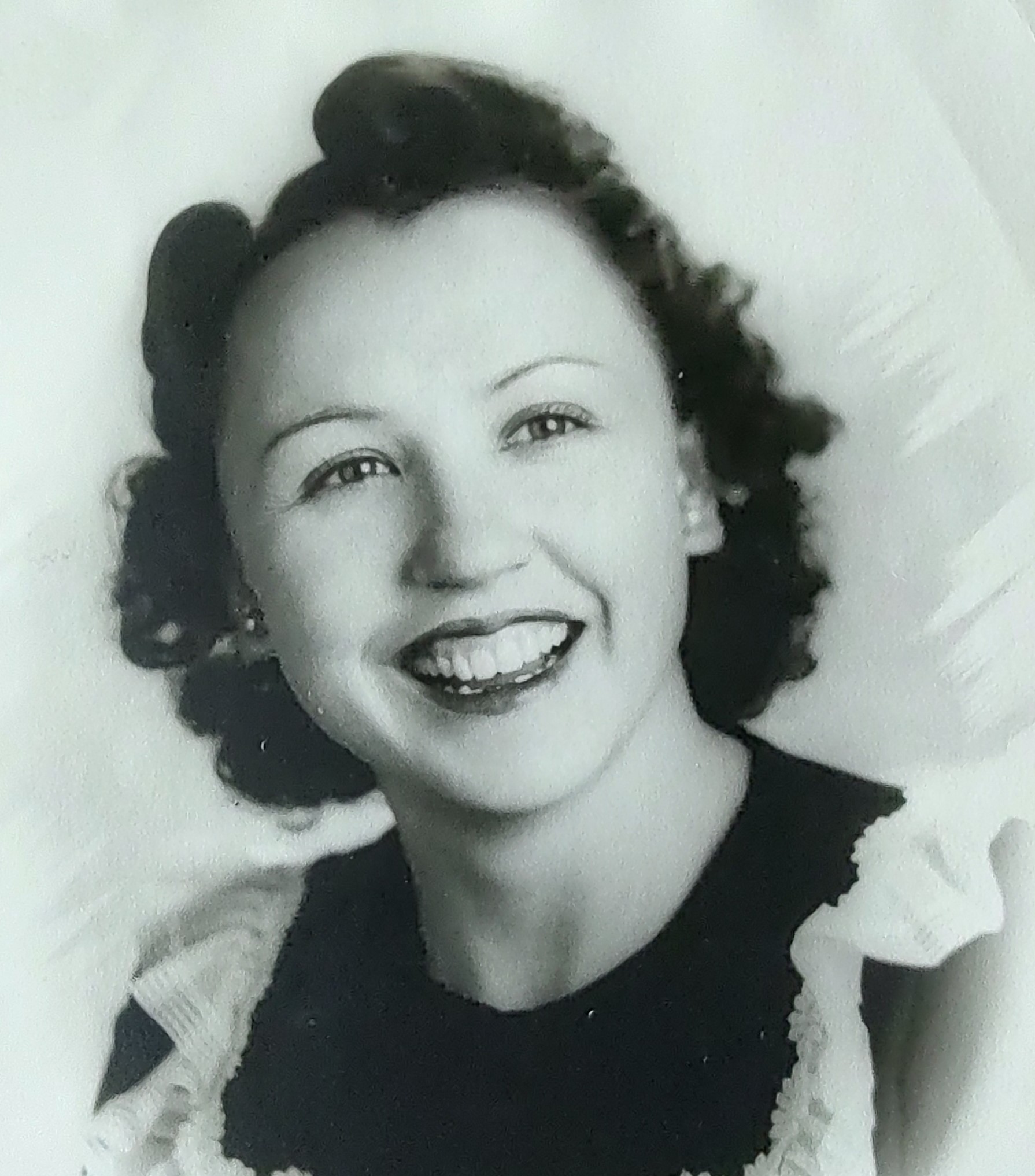
On September 9, 2023, after nearly a week of being mostly unresponsive, Grandma died at age 101. I don’t want to write about my experience of her death here. All I want to say is: she lived an absolutely incredible life. Daughter of a sharecropper, raised during the Great Depression and Dust Bowl, married at 18, first-time mother at 20, loss of her second child at 22, working in her home and out of it, selling cosmetics so they could afford music lessons for the kids, always church-going and God-fearing, teaching her children to prize education and kindness, a woman of unparalleled generosity in hospitality, watched her children grow up and move to the other side of the country and the other side of the world, reveled in having grandchildren (wishing she’d had us first!), full of sometimes short temper and always laughter, artist whose hands stitched over 100 quilts and gave most of them away, expert cook and baker who really could have opened and run a restaurant, saw the death of another of her children, wife of more than 78 years when her husband died, worker of word-finds and player of dominoes, gradually losing almost all memory but still laughing and smiling a week before her death, telling me, “I don’t quit!”

“I know you don’t, Grandma — that’s why you’re still here!”

And now she’s not.

Not because she quit. But because she was simply finished and it was time.

I’m feeling grief, sorrow, relief, frustration, longing, joy, sadness. All of these, all at once, pretty much all the time. She was a lover and a fighter, and that’s all I can ever hope to be, even though I come at it from a completely different worldview. I could write an entire book about how much that woman frustrated me and how deeply I admire her.

Bookends: Grandpa died as I was reading aloud to him and to the family present from 2. Corinthians. Four-and-a-half years later, Grandma died less than 5 minutes after I finished reading 2. Corinthians aloud to her and to the family present. That means a lot to me.

Frances Weger
Jan. 16, 1922 – Sept. 9, 2023

July 27, 2022 / Courtney / Inspiration

what is fun? (baby don’t hurt me)

Yes. I chose that title specifically to get a certain song stuck in your head. If you’re American or GenX* or both, you’ll know which one it is. You’re welcome.

(*I’m planning a near-future post concerning my thoughts on the very American phenomenon of shoving humans of the past 130ish years into boxes labeled with specific generational names. Watch for it.)

Even since before I started my brain reset, I’ve been pondering what “fun” means. Mainly because the time span since March 2020 has not felt very fun, and I wonder how that’s affecting all of us.

But what *is* fun? What is it in abstract? What is it specifically to me? How do we figure out what it is we consider “fun”? My most recent experience of depriving myself of certain “fun” things that, in retrospect, turn out not to be quite so enjoyable has made me want to put my wonderings into some coherent form. And so, here we are. I’ll leave it to you, Gentle Reader(s), to decide whether or not I achieve the coherency part.

I’m not a psychologist. I’ve had some education and a little bit of training, but it’s all juuuust enough for me to get myself in trouble. I’m certainly not a psychoanalyst, sociologist, or anthropologist. So don’t expect much science from me on the subject of “fun”. All I have to go on are my own experiences, things I’ve read, conclusions I’ve come up with, and questions. That’s your caveat emptor.

What I can give, at least for starters, is the result of my very brief etymological research. (Etymology is the study of word origins. That’s a little reductive, but it’s enough for my purposes.)

FUN comes to us via the Middle English word “fonne,” which basically meant “fool.” Further back, its origins are unclear, but it’s related to similar words in Norwegian and Swedish, which means it definitely has a Northern Germanic root somewhere. And that’s all’s I got on the etymology, which I find very disappointing.

What’s fun? Apparently, behaving like a fool. “Fool” itself comes from a Latin word meaning “bellows,” as in the big leather bag smiths used to stoke their fires. So, having fun makes you a foolish windbag, which is also disappointing as well as a little insulting.

Moving right along.

We have fun. We enjoy fun things. We think things are funny. We think we are funny. The word origins and historical usage give me an overall impression of laughter, goofy behavior, and holding forth in a silly manner until other people get annoyed. But there are other ways of having fun that have nothing to do with foolish actions.

I have fun researching word origins. My friend Jenai has fun organizing things. My husband has fun listening to a piece of music and analyzing the chord progressions.

It occurs to me that I surround myself with nerds.

But acting goofy is fun too. My daughter, who is nearly 10, has an inordinate amount of fun reciting lines from Vinny Thomas’s Galactic Federation video over and over and cackling maniacally. Over and over. Did I mention over and over? I adore the video and laugh about it often. But I don’t need to hear lines from it every day, and certainly not ten times a day. To me, that is not fun. That is annoying. But to her, it’s the best thing ever and never stops being funny and fun.

Thanks to Marie Kondo, I know that fun is whatever sparks joy. I know that’s not how she means for people to use her phrase, but it works for me in this context. Sadly, it doesn’t work for me in the context of getting my home in a semblance of order, because that activity, to me, is not fun. It doesn’t spark joy.

Although I will admit to having felt joyful satisfaction as I rearranged the kitchen utensils drawer this morning. Is this adulting?

I can think of so many things that are fun to me. Books are fun — both reading them and organizing them and looking at them. All those beautiful, magical otherworlds just waiting for me to explore them. Exploring! That’s fun. Nineteen years ago in Ireland, my dad and I explored the ruins of a castle while the husband and my mom waited in the car, parked on a beach. My dad and I were having so much fun, we almost didn’t get back to the car before the incoming tide cut our vehicle off from the road. That was fun. The husband and the mother disagreed.

Hiking is fun. Another kind of exploration. Dancing is fun. As of this writing, I haven’t participated in a Zumba class in nearly two weeks, and I am dying for that type of fun. Even weightlifting is fun, although I don’t usually feel that way until I’m finished. One result of my various chronic illnesses is that I don’t get The Endorphin High as quickly or as often as other people. That makes exercise not always attractive. Or fun, as it were.

Maybe that’s one reason I’ve never had fun playing competitive sports. Volleyball in high school was utterly demoralizing. Badminton was meh. Dodgeball in elementary school was torture. I don’t have fun watching competitive sports, either, unless it’s dancing. Or figure skating, which is kind of like dancing but with murderblades strapped to your feet. I have fun watching football with enthusiastic fans, but it’s because of their infectious enjoyment, not the sport itself.

Watching other people do the thing is not really my thing. Friends and cousins used to want me to watch them play video games. What to heck? What am I supposed to get out of this? I’m watching you have fun but not getting to participate in the fun. I enjoy playing video games until I win, and then it stops being fun.

Board games can be fun, if it doesn’t take 12 hours to play and there’s a lot of conversation and joking around. Chess is fun, but it’s hard to find other people offline who agree. Card games are fun in a big group if everyone’s a good sport and keeps it light and chatty. Clearly, I’m more about the social interaction than the competition. The minute someone starts getting frustrated or angry that they’re not winning, I stop having fun. Even if I’m winning.

Social interaction is fun, but not if I have too much. That’s draining.
Time by myself is fun. But not if I have too much. That’s…untethering.

Certain societal demographics tell me that as a middle-aged mother, I’m supposed to wear shirts that say things like “it’s wine o’clock” and “they whine, I wine.” But wine mom culture is insidiously depressing to me. “I have stress, so I’m gonna lean on alcohol for support.” This wine-momming phenomenon is not fun. Embracing that culture would mean giving myself over to the same state of being as I’m in when I’m doomscrolling social media. Just another thing to distract me from facing my actual life.

Good drinks and conversation with friends? YES. That’s fun.

Things that are fun to me and things that aren’t. Those are some specifics. But what is fun? I feel like Lt. Cmdr. Data as he does all he can to define a human emotion without having experienced it himself. Is fun even an emotion? Or is it an activity? Yes? I’ve experienced fun, but it’s still an amorphous concept. What’s fun to one person is deadly dull to another. Can there be an objective quantification?

This meme is fun.

Fun is what sparks joy. Neurons firing, endorphins flooding brain tissue. Yes? Maybe?

Amanda Doyle says: “Rest is to work as play is to gloom.” After we work, we need rest. After we’ve gloomed, we need play? We can’t have fun if our physical, emotional, and mental needs aren’t being met. If I’m not getting enough sleep and regularly, I’ll have no energy or even desire to engage in fun. Does fun take effort? Yes? Or does the enjoyment make it feel effortless?

There’s a lovely quote about fun and play and their opposite. Online sources can’t seem to agree if it comes from Simon Sutton-Smith, Brian Sutton-Smith, or Stuart Brown. But it goes like so:


“The opposite of play isn’t hard work; the opposite of play is depression.”

As someone who has suffered from depression for more than half her life and is now, at age 45, struggling to define what “fun” is, I can confirm this. Play — or fun, if you prefer — requires a certain lightness of heart, a willingness to let go, even a commitment or determination not to let daily cares or the state of the world drag you down. Depression is anything but light. Depression clings with desperation. And depression, even when it’s not circumstantial, sucks you deeper and deeper into an abyss with every personal or universal difficulty.

Looking back at my life, I can identify the times when I played least, the times when I had the least fun: it was during the times I was most lost in depression. I couldn’t play or have fun; I didn’t want to play or have fun.

Work can be fun. Some of the most fun times of my life have been when I was working, when I was putting great effort and resource and time into making something. Creating is always fun for me, whether it’s alone or with other people. Work, if you’ve picked the kind that suits you best, is fun.

Depression is not fun. Depression is play’s opposite. All work and no play means Courtney’s depressed.

What is fun?

Fun is what sparks joy. Fun is play for the sheer joy of it. Fun is work in creating. Fun is an emotion. Fun is an action, a series of actions. Writing this blog post has been fun.

I asked my daughter. She said:

Fun is enjoying things. Running around and getting really dirty!

Sounds like fun to me.

Posts pagination

  • 1
  • 2
  • 3
  • Next

Find Stuff

Check out Court’s newest!

Front cover of a novel. Title and author's name in white font with serifs, all CAPS. Title: The Priestess Murders. Author: Courtney Cantrell. The image depicts a gnarled tree reaching from the bottom left corner up the left side and across the top half of the image. The tree is silhouetted against a star-spangled, dark blue night sky. In the background (lower third of image) are leafy, densely growing trees dimly lit by what might be moonlight (light source not shown). In the center of the image is a honeybee viewed from above. The bee glows a pale gold and is surrounded by a nimbus if pale gold light. The bee also exudes rays of pale gold light reaching up and down and left and right. A gash is torn in the bee's thorax, and red blood trickles from the wound. Novel published October 2025.

1
Courtney Cantrell: filthy chaos gremlin with vorpal unicorn morphing powers. She writes fantasy, sci-fi, and weird -- reads many, many books -- and questions ALL the things. Made of coffee, chocolate, and glitter glue.

Ogle Court's Shorts for free short stories.

Keep up with Courtney!

Subscribe to Court Can Write

Loading...

Rummage around

©2026 Courtney Cantrell's COURT CAN WRITE - Powered by Simpleasy